
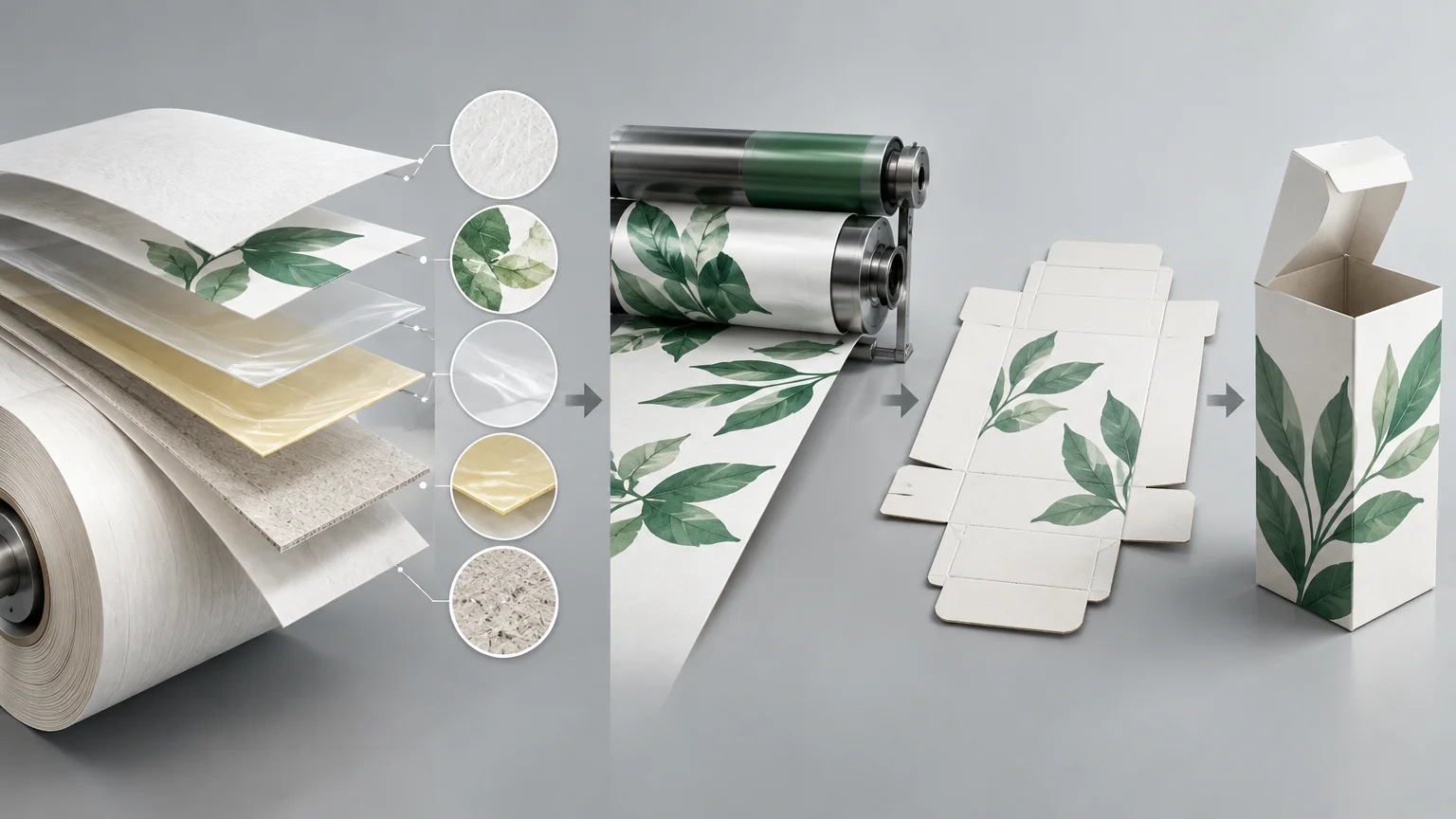
Print Production: Files, Materials and Finishing
Connect prepress, materials, ink and finishing to understand how a print job becomes a working physical product.
How print production becomes physical
Print production begins before press time. A file carries dimensions, color instructions, images, and cut information, but its final behavior also depends on registration, substrate, ink, pressure, drying, folding, adhesive contact, and finishing. ArkiBlog Print explains those connections for designers, print buyers, production coordinators, makers, and operators who need practical answers before a job moves forward.
The publication follows construction logic from artwork to finished object. It covers prepress, dielines, color systems, materials, adhesives, converting, packaging structures, large-format work, and production troubleshooting. The point is to show which physical process creates a result, where tolerances can move, and which design choice can control the outcome. A technically valid feature can still fail when it reaches the next operation.
Start with the production decision
If you are preparing artwork, begin with the finished size, output method, substrate, and finishing sequence. Those constraints determine whether bleed is sufficient, images retain useful resolution, color is defined appropriately, and cut or fold information is separated clearly. A cleaner file starts with a clear model of the process.
If you are reviewing a proof or diagnosing a defect, work backward from the visible symptom. Ask whether the change comes from artwork, RIP interpretation, ink limits, surface behavior, mechanical registration, tooling, pressure, temperature, or handling. Separating digital causes from material and mechanical causes prevents one adjustment from hiding another problem.
Latest from ArkiBlog Print
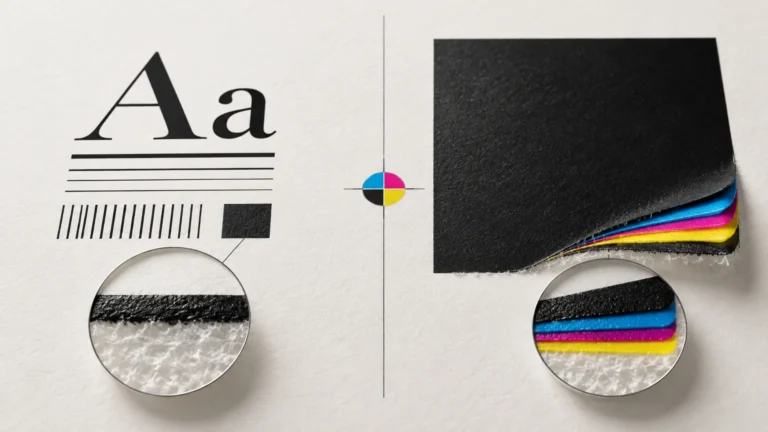
Rich Black vs 100% K: When Each Black Belongs in a Print File
Use 100% K for most small text and fine detail, and a printer-approved rich black for large black areas. The reason is not merely appearance: each choice changes registration risk,…
Read more
Quick Prints Fulfillment: Where Print Production Ends and Fulfillment Begins
The production-to-fulfillment handoff is not simply a move from pressroom to warehouse. It is a controlled transfer of approved components, item data, inventory status and packing instructions.
Read more
Emboss vs Deboss: Dies, Counterdies, Depth, and Stock
Learn how embossing and debossing physically form paper, how dies and stock control the result, and what to specify before tooling begins.
Read moreRead from cause to consequence
Use the latest guides to answer the immediate question, then trace the neighboring variables that can alter the result. A color issue may also be a substrate or profile issue. A cracked fold may begin with grain direction, caliper, scoring, coating, or fold geometry. Production problems rarely respect the boundaries of a design file.
ArkiBlog Print is built for careful comparison rather than rule collecting. Check the assumption behind each specification, confirm changing details against current equipment and material documentation, and use a proof or supplied measurement when the decision depends on actual output. The useful question is not only what happened, but why it happened in this construction. That distinction turns a symptom into a decision for the next file, proof, or production conversation.
Frequently Asked Questions
What is ArkiBlog Print about?
It explains how files, materials, inks, adhesives, cutting, folding, and finishing interact to create printed objects.
Who is this publication for?
It is for designers, print buyers, production coordinators, makers, and operators who need practical production knowledge.
Is ArkiBlog Print a printing service?
No. ArkiBlog Print is an editorial publication focused on print engineering and production mechanics.
How should I begin preparing a print file?
Start with the finished size, production method, substrate, finishing operations, and the printer’s current file requirements.
How much bleed should a print file have?
A practical default is 0.125 inch, or about 3 mm, on each trimmed edge unless the printer or template specifies otherwise.
Why can RGB artwork change when printed?
Screens and print use different color systems. Profiles, conversion settings, ink, substrate, RIP behavior, and proofing can affect the result.
Is transparency the same as white ink?
No. Transparency, a white artwork object, white ink, and a white substrate are separate production conditions.
Why do labels sometimes fail to stick?
Adhesion can be affected by surface energy, contamination, texture, pressure, temperature, material compatibility, and dwell time.
Why do carton panels need compensation?
Paperboard thickness changes fold geometry, so nominally equal panels may not assemble into an accurate finished structure.
How should I diagnose a print defect?
Identify the visible symptom, then separate possible file, color-management, material, mechanical, tooling, and handling causes.